Classic Mac and Cheese
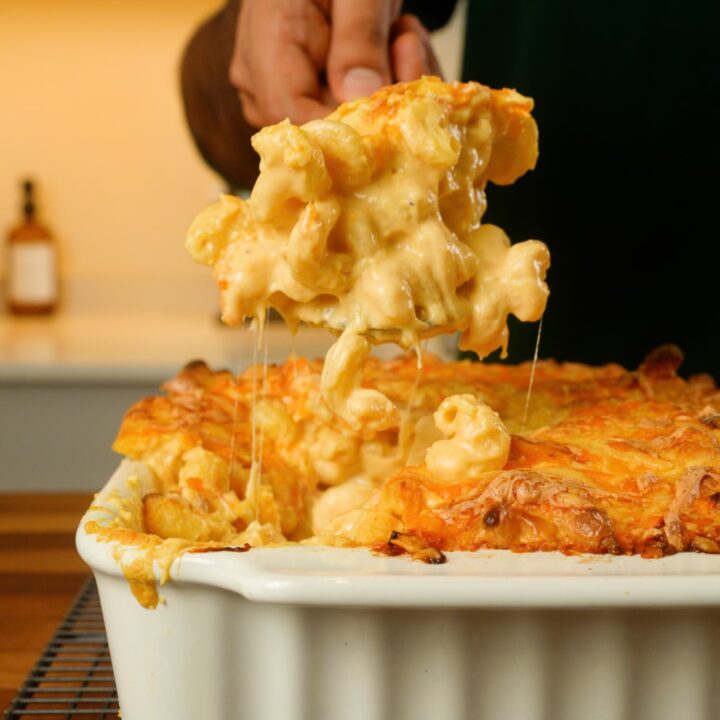
If you love Mac and Cheese, this recipe features a velvety cheese sauce made with a blend of 4 cheeses for maximum creaminess and cheesiness. It’s rich, flavourful, and finished with a bubbling golden crust. If you love a mac and cheese that’s indulgent, gooey, and packed with cheesy flavour, this recipe is for you.
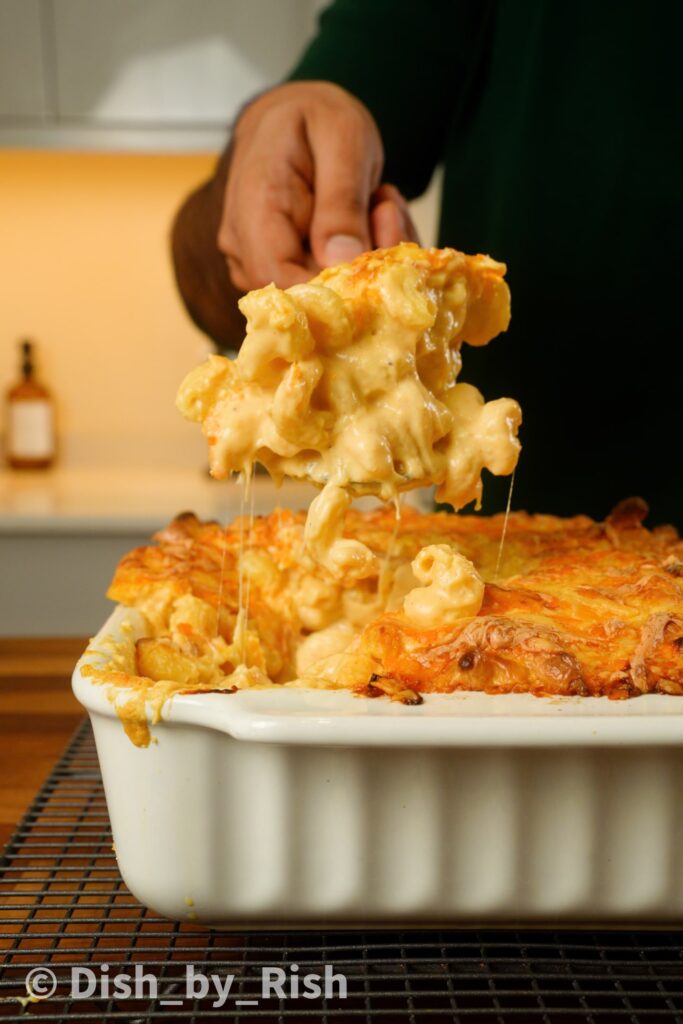
Classic Mac and Cheese
This is without a doubt one of the ultimate comfort foods. It’s one of those classics that’s satisfying, creamy, and guaranteed to please a crowd. And it all starts with a smooth and silky béchamel sauce, made with butter, flour, and a combination of evaporated milk, and whole milk. In my opinion, a roux (flour and butter in the béchamel) and evaporated milk are the keys to a smooth cheese sauce.
Now, this recipe uses a blend of 4 cheeses, which ensures that each mouthful delivers layers of flavour. Sharpness from the extra mature cheddar, sweetness from the red Leicester, creaminess from the gouda, and stretchiness from the mozzarella. It’s definitely a big bowl of cheese and comfort.
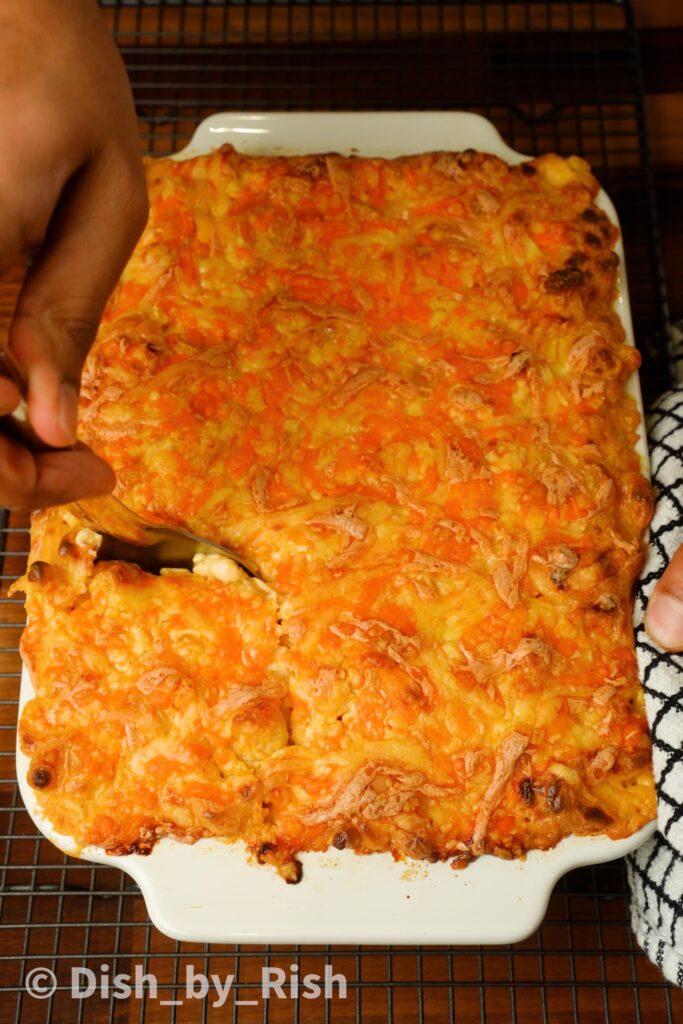
So, what makes this mac and cheese special?
It comes down to the balance of cheeses and the technique. The béchamel-style sauce ensures a silky, lump-free base while the combination of evaporated and whole milk adds richness without being heavy. Both of these also help to prevent your cheese sauce from splitting. The milk proteins help emulsify, and the flour helps stabilise. This is an issue that many mac and cheese recipes are prone to, but fear not with this recipe.
The blend of four cheeses here offers the perfect blend of flavour, creaminess, and melt. This is then balanced out by the Dijon mustard, garlic powder, onion powder, and bay leaves. Along with some subtle warmth from black pepper, smoked paprika, and nutmeg. Altogether, we end up with a mac and cheese that’s not only unbelievably smooth, but also packed with flavour.
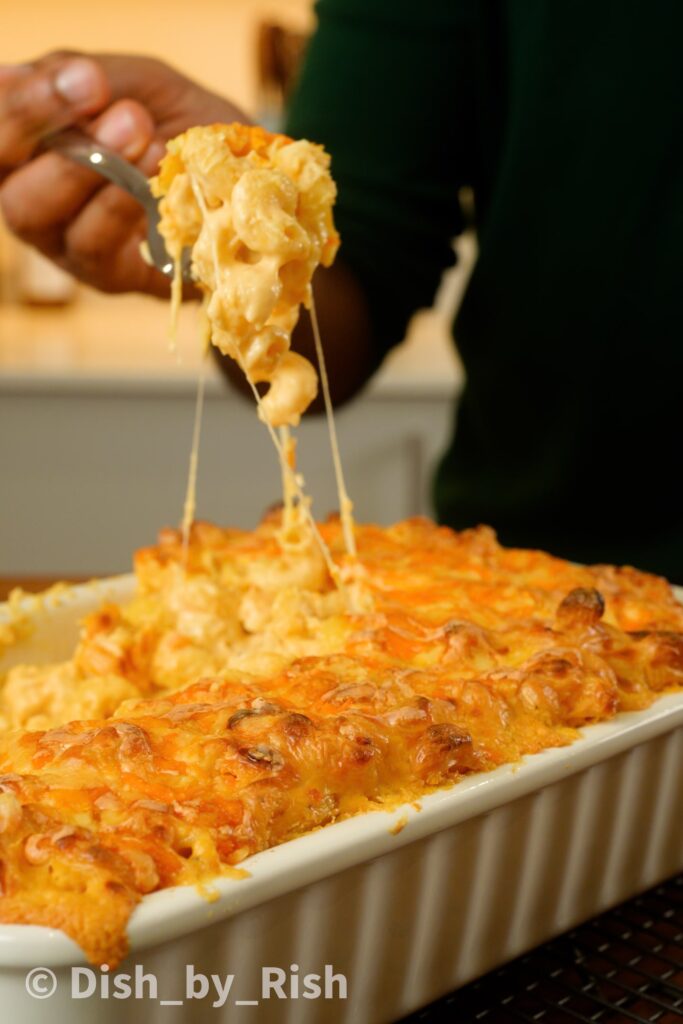
Why use a béchamel base?
A béchamel sauce is one of the classic French mother sauces. It’s comprised of a roux (butter and flour) and milk. This creates a foundation for a creamy mac and cheese that is less likely to split and become grainy. It also adds another layer of richness due to the addition of butter.
The béchamel in this recipe also uses a combination of evaporated milk and whole milk. The higher concentration of milk proteins in evaporated milk help to emulsify the sauce which further reduces the likelihood of the cheeses separating.
Why you need to be shredding your own cheese for Mac and Cheese
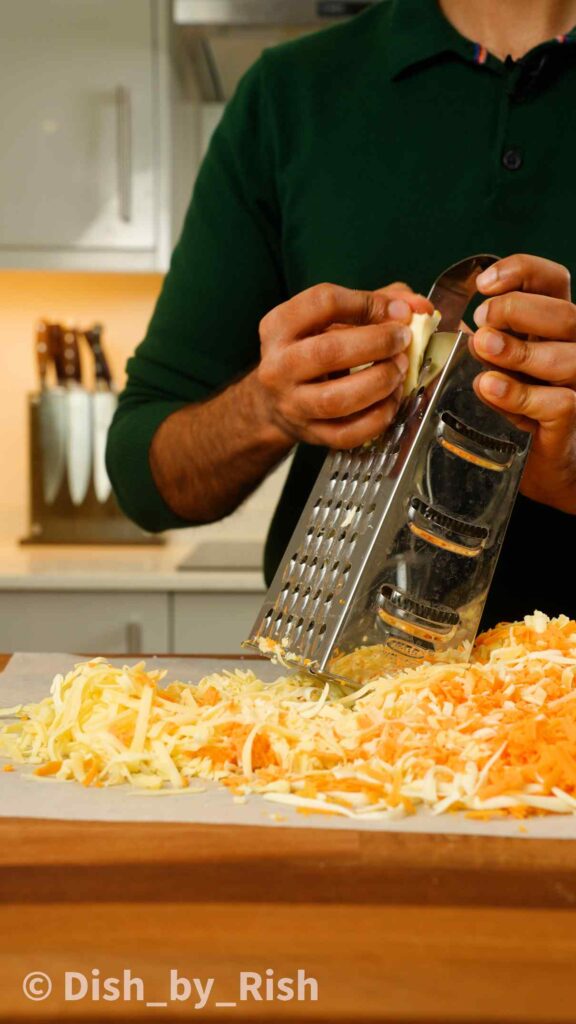
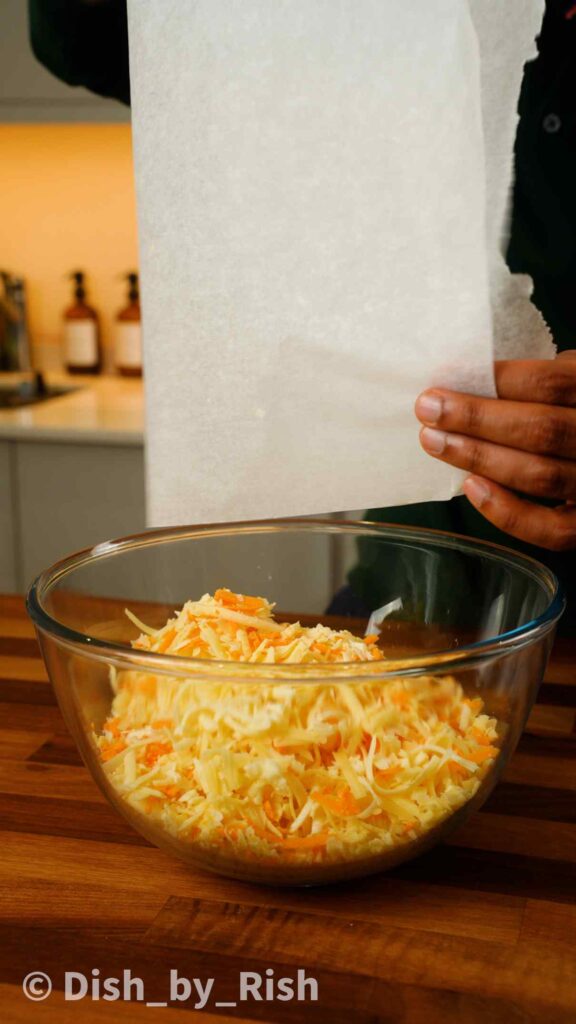
Pre-shredded cheese might be convenient, but it’s one of the biggest culprits behind grainy or clumpy mac and cheese. Store-bought grated cheeses are coated with anti-caking agents like potato starch, which prevent the strands from sticking together in the bag. However, they also stop the cheese from melting smoothly.
When you make mac and cheese, these coatings can cause the sauce to turn grainy instead of creamy. Hence, I’d always highly advise shredding your own cheese so you end up with a cohesive sauce that’s smooth and glossy.
This recipe also works really well as a Stovetop Mac and Cheese!
I use this exact same recipe and method to make a stovetop mac and cheese. The only changes I recommend are:
- Add all of the cheese to the sauce, there is no need to reserve 1/3rd of the cheese
- Cook the pasta till al dente according to package instructions (instead of 2 minutes short). Drain and immediately mix the pasta into the cheese sauce, mix to combine and plate up
What are the best cheeses for mac and cheese?
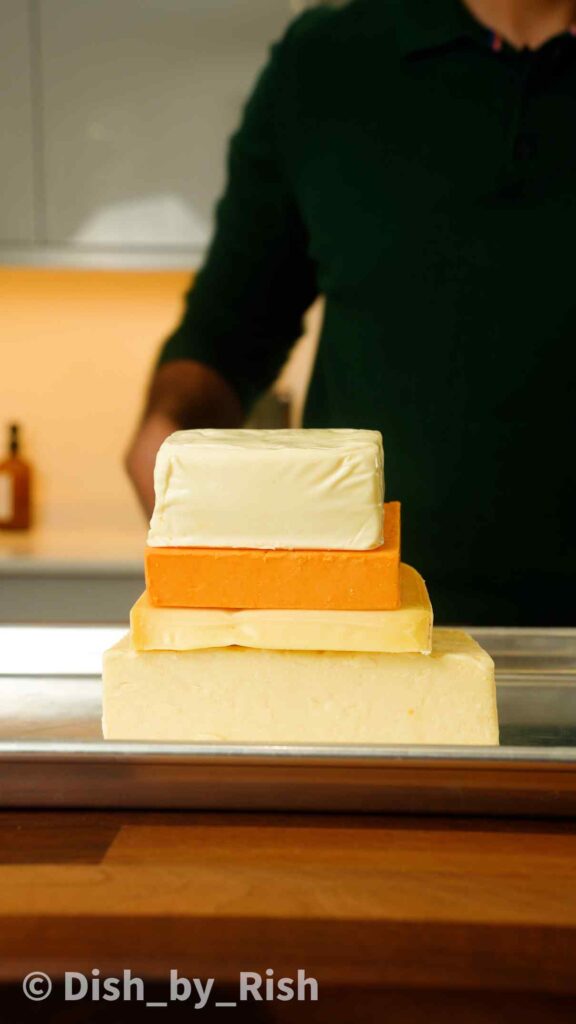
The 4 cheeses that I like to use (these are the ones I’m using in this recipe) are:
- Extra mature cheddar/sharp cheddar – classic choice for a bold and sharp flavour (this one is synonymous with mac and cheese for me)
- Red Leicester – has a mild sweetness which balances out the strong cheddar. Also adds that classic orange hue to the sauce
- Gouda – smooth and creamy with a subtle buttery flavour, also melts into the sauce very well
- Mozzarella – adds necessary stretch and gooeyness but is quite mild in flavour. Hence, it needs to be paired with stronger cheeses
Other cheeses that work really well for mac and cheese are:
- Gruyère – young Gruyère has a mild nuttiness, subtle sweetness and melts into the sauce well. Aged is sharper, nuttier, and more intense (it makes more of a grown-up version of mac and cheese)
- Monterey Jack – mild and creamy, plus it melts really well
- Fontina – buttery with a subtle earthiness, and melts very well
- Parmesan or pecorino – adds saltiness and umami, so a little goes a long way
Why you’ll love this Classic Mac and Cheese
- Creamy and smooth – thanks to the béchamel base and evaporated milk
- Great cheesy flavour – this is from the use of four complementary cheeses
- Can be baked or used as a stovetop mac and cheese – it’s great either way!
- Uses cavatappi instead of macaroni – cavatappi has a corkscrew shape which allows for maximum sauce coverage
- Golden, bubbling cheese crust on top – adds an extra oomph of cheesiness and showcases all 4 cheeses
- Classic comfort food – perfection for weeknights, gatherings, or cosy weekends
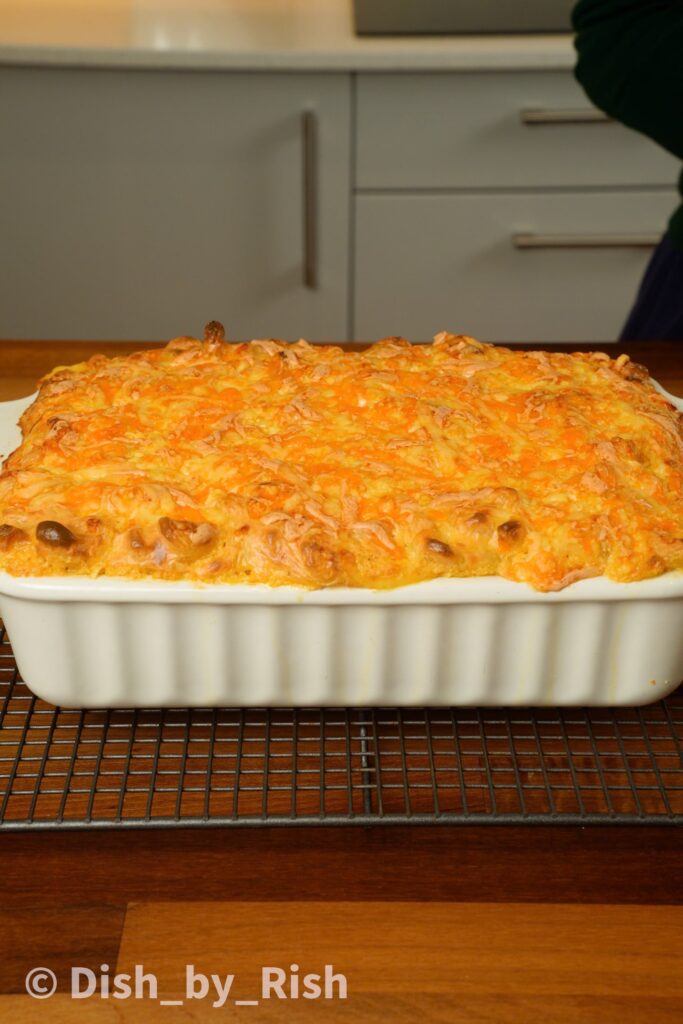
Let’s talk about some of the ingredients
I’ll cover the key ingredients below, but the full recipe with quantities and instructions can be found at the end of this post
- Cavatappi pasta – its spiral shape holds onto sauce exceptionally well. Elbow macaroni also works great, but any pasta shape will do
- Cheeses – Extra mature cheddar (sharp cheddar), red Leicester, Gouda, and mozzarella (see the section above for other cheeses you might want to use)
- Evaporated milk – has a higher concentration of milk proteins which aids in emulsifying the sauce so it stays smooth
- Whole milk – balances out the evaporated milk, making the sauce silky but not heavy
- Dijon mustard – adds a subtle acidity for balance and also helps with emulsification
- Butter and flour – this forms the roux, which is the base of the béchamel
- Spices and herbs – I highly recommend adding in garlic powder, onion powder, smoked paprika, black pepper, nutmeg, and bay leaves for depth of flavour
The KEY tips for making this mac and cheese
- Grate your own cheeses – pre-grated cheese often contains anti-caking agents that prevent smooth melting
- Add the cheeses off the heat – mixing cheese into the hot sauce after removing it from the heat prevents curdling and graininess
- Cook pasta 2 minutes short of the full cooking time – it will continue to cook in the oven, so undercook it slightly to avoid it overcooking
- Top generously – that extra layer of cheese gives you the golden crust and gooey middle everyone loves
How to make this Classic Mac and Cheese
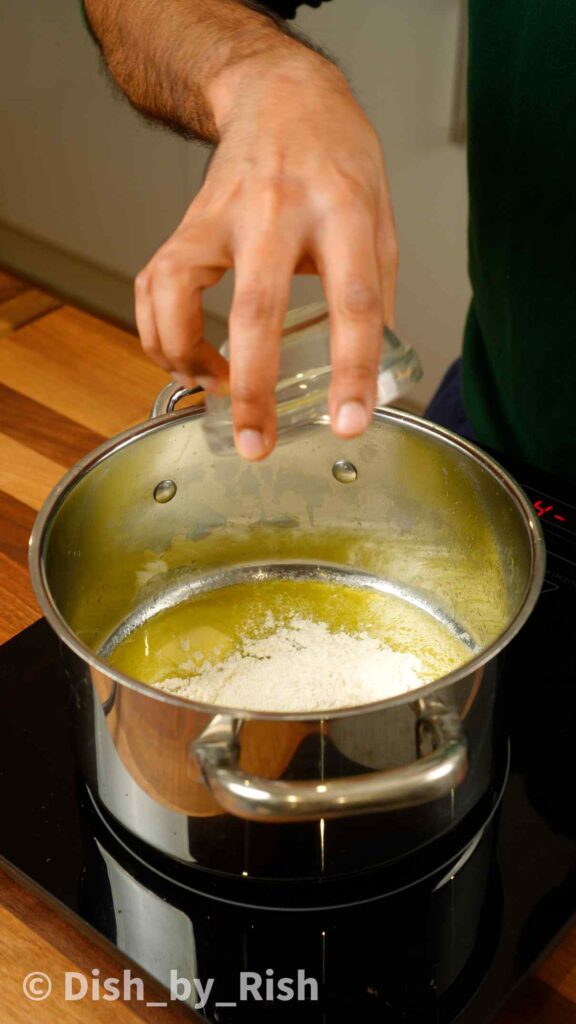
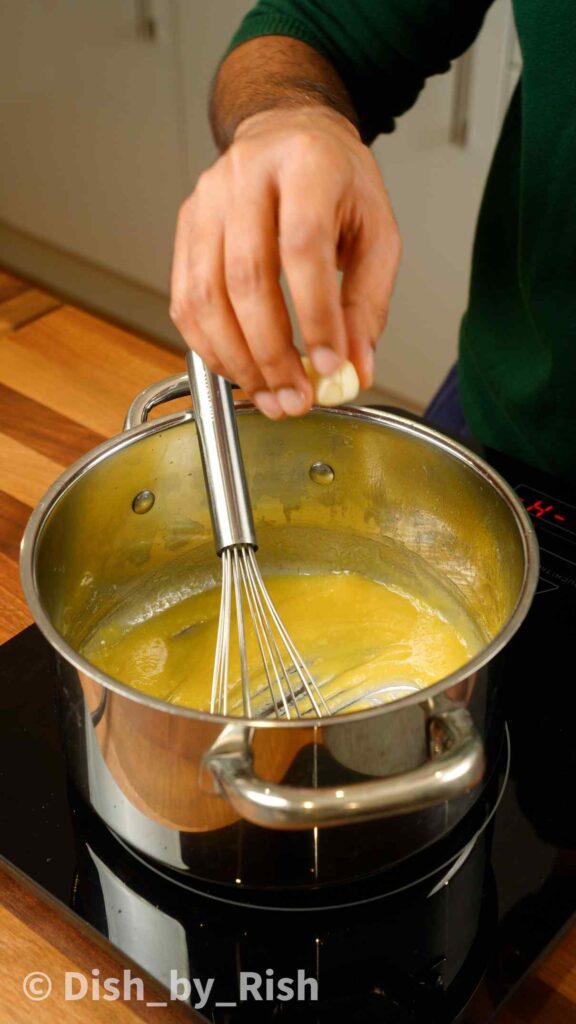
Start by making the roux, which is a mixture of flour and butter. I like to add a clove (or two) of garlic to my roux for a subtle background flavour
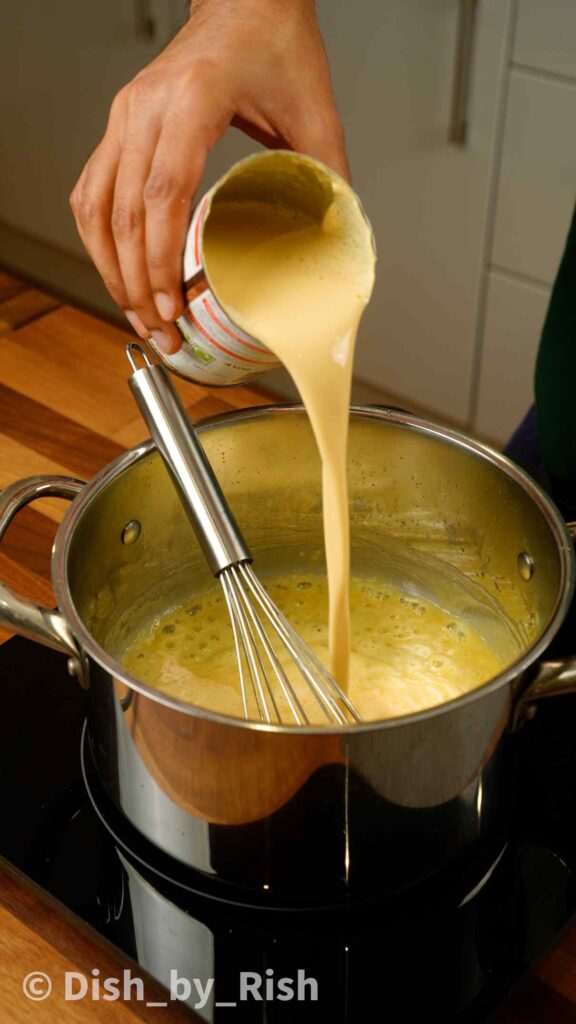
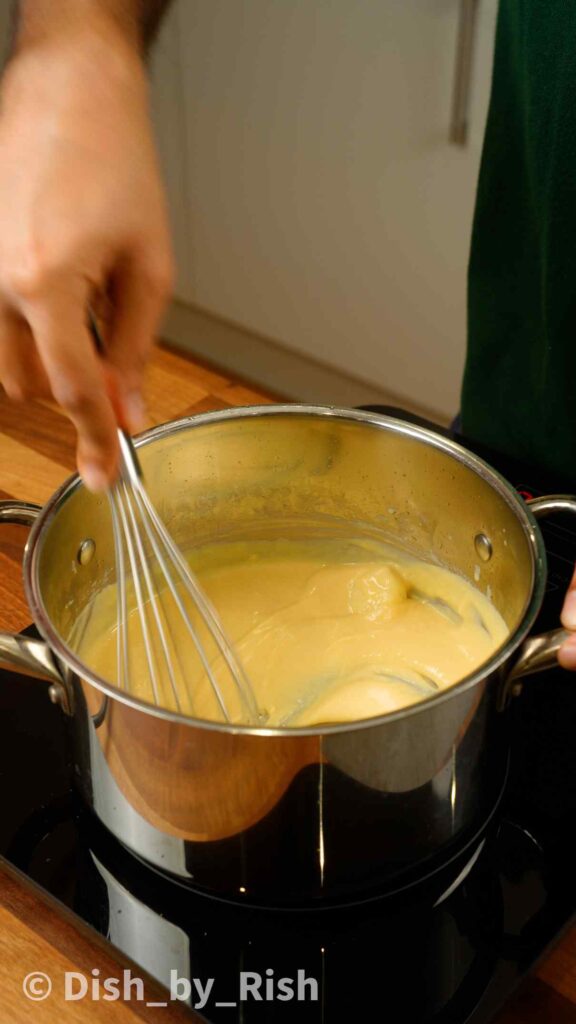
Pour the evaporated milk into the roux in 2 additions, whisking well between each one
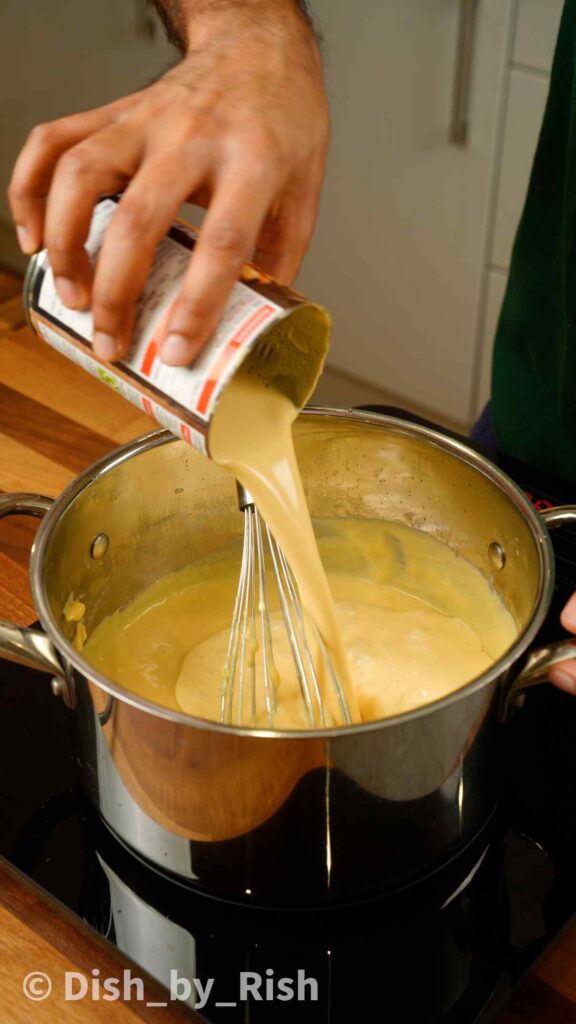
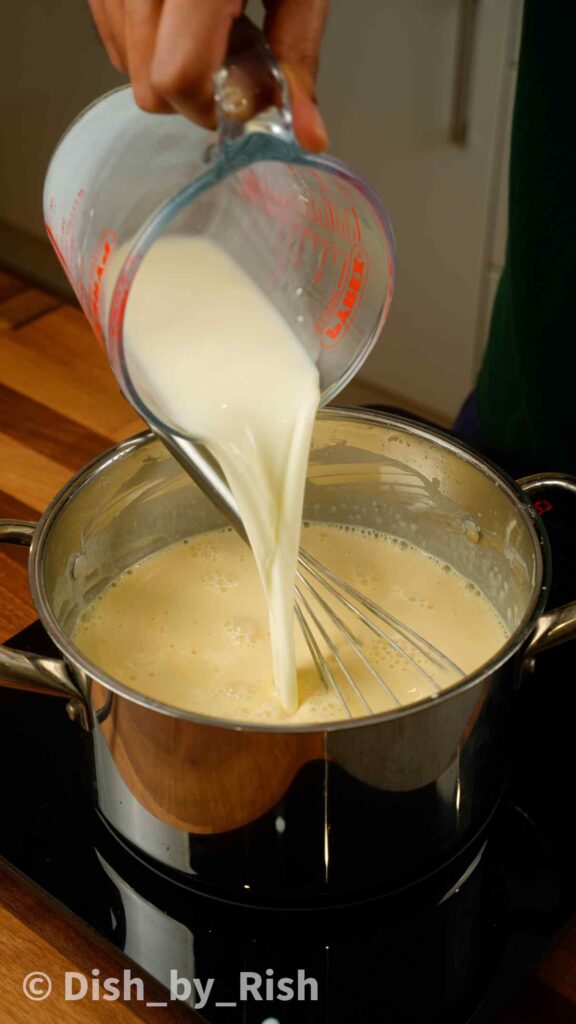
Once that’s all incorporated, add the whole milk in 2-3 increments and continue whisking between each addition
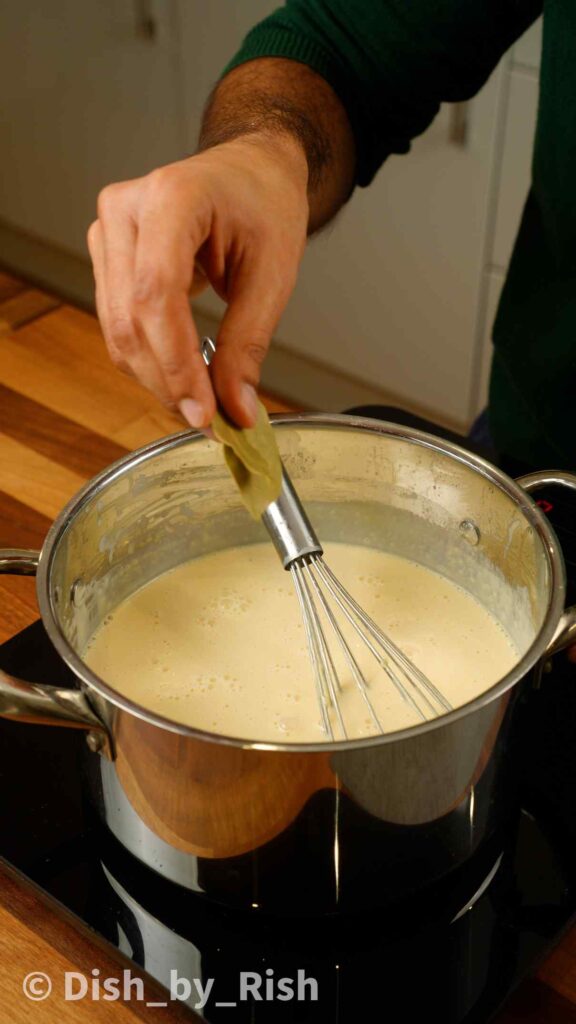
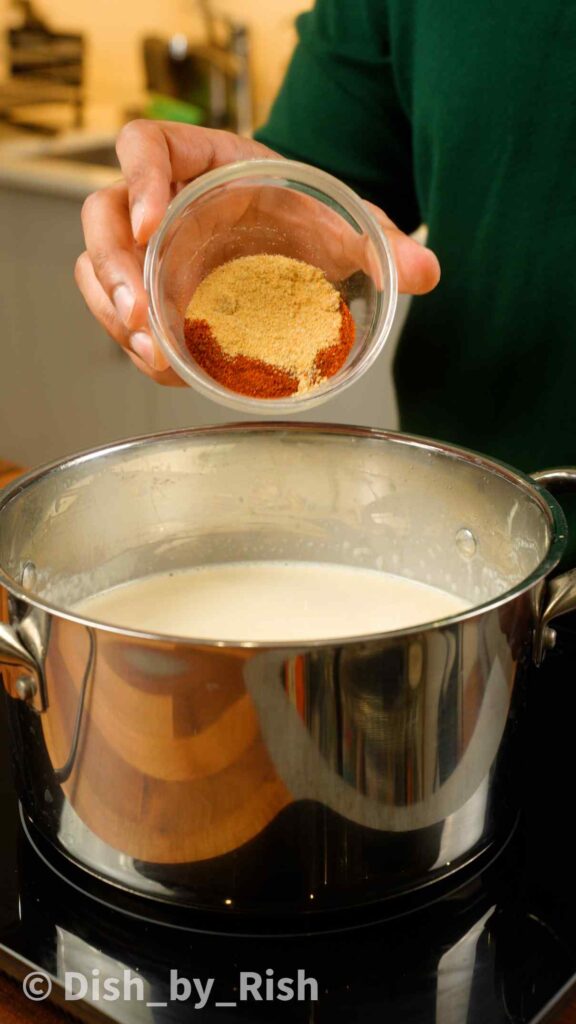
Next, add in the bay leaves, garlic powder, onion powder, and smoked paprika. Continue to cook the sauce for several minutes while stirring continuously
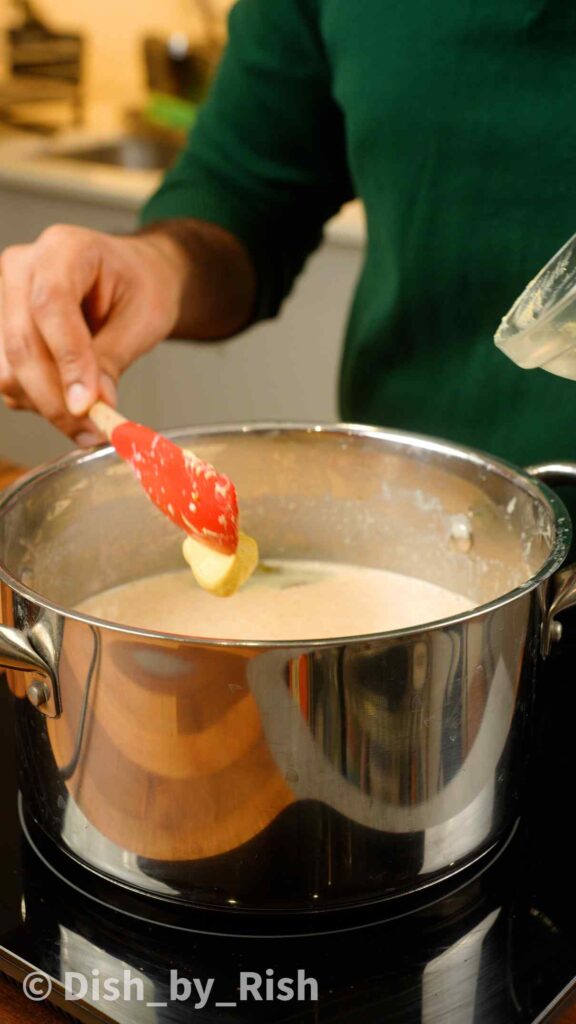
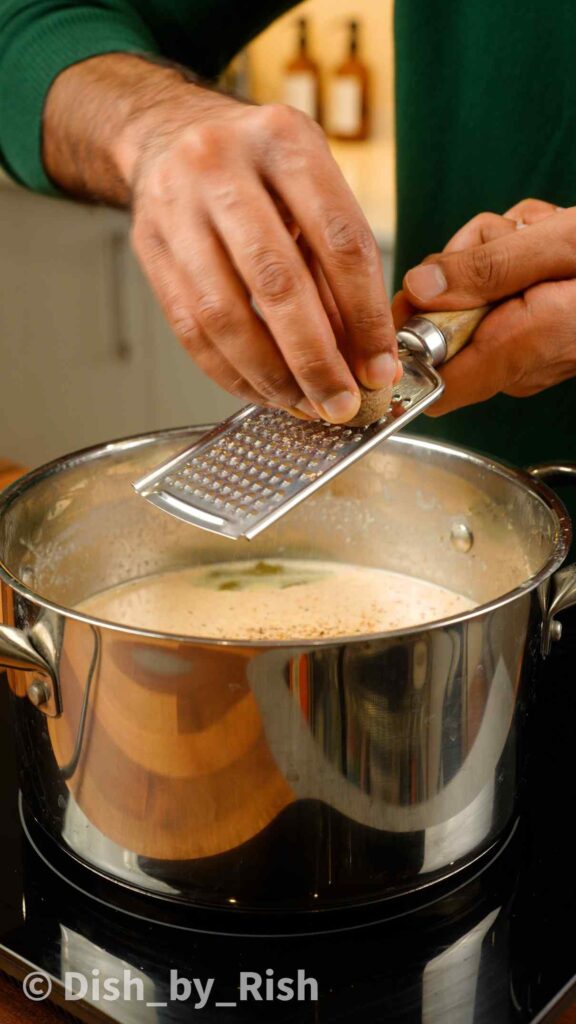
Finish the béchamel sauce with Dijon mustard, black pepper, and grated nutmeg. I haven’t added salt at this stage as the cheeses are salty
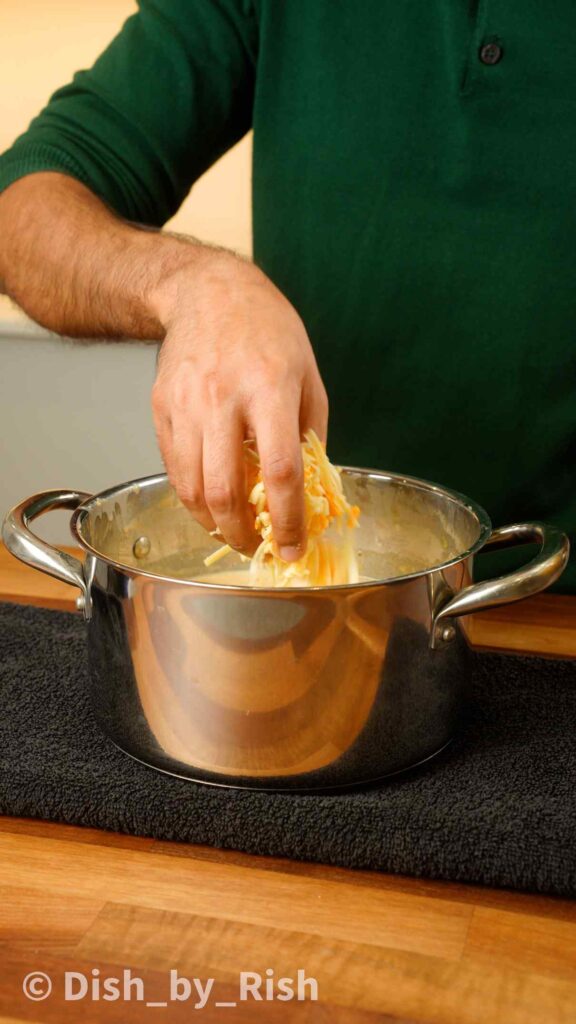
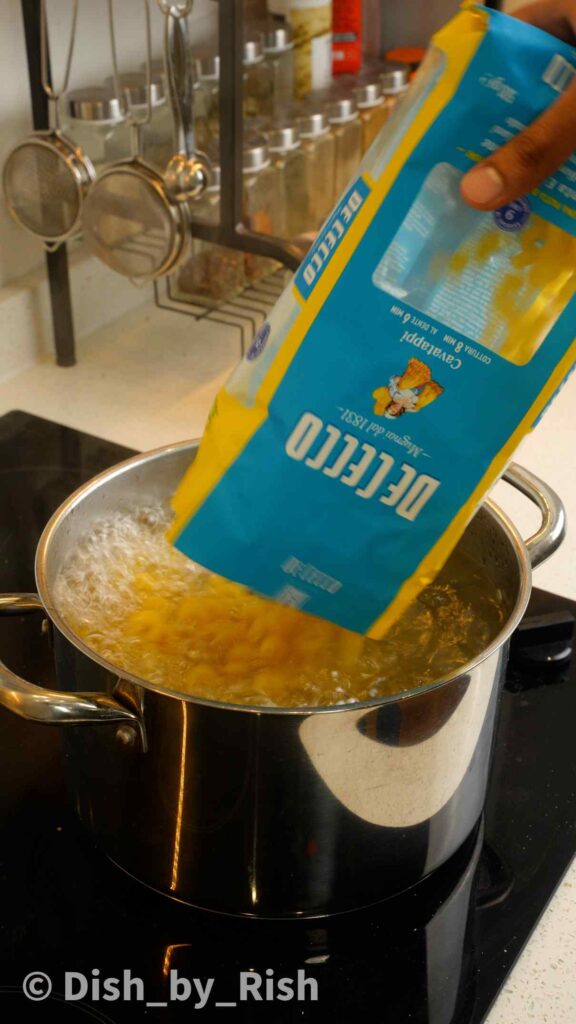
Take the sauce off the heat, and while still hot, add the cheeses gradually. Whisk and stir between each addition to ensure the sauce says smooth and doesn’t split. This is also a good time to start boiling the pasta, make sure to cook it for 2 minutes less than the packaging time as it will continue to cook in the oven
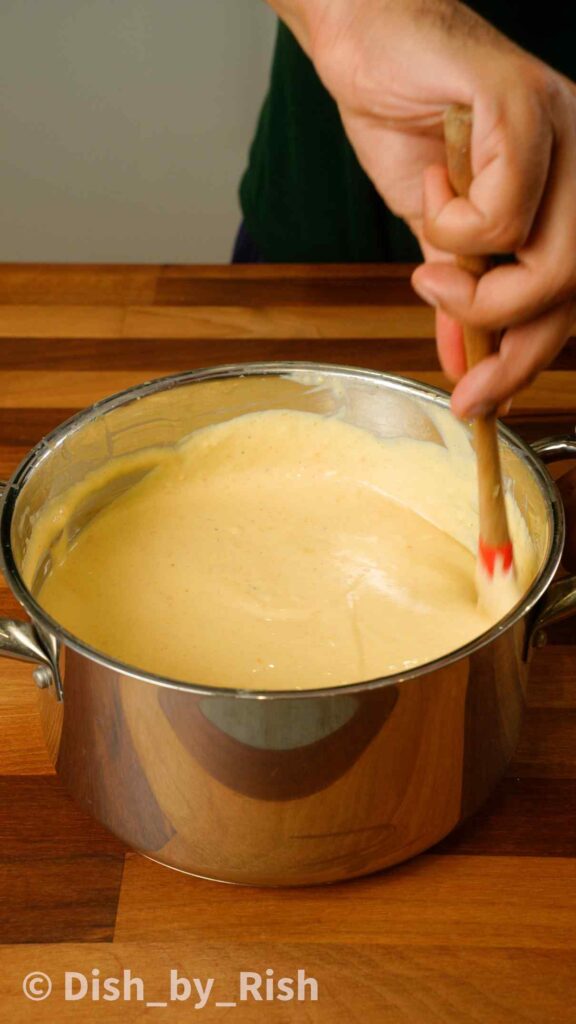
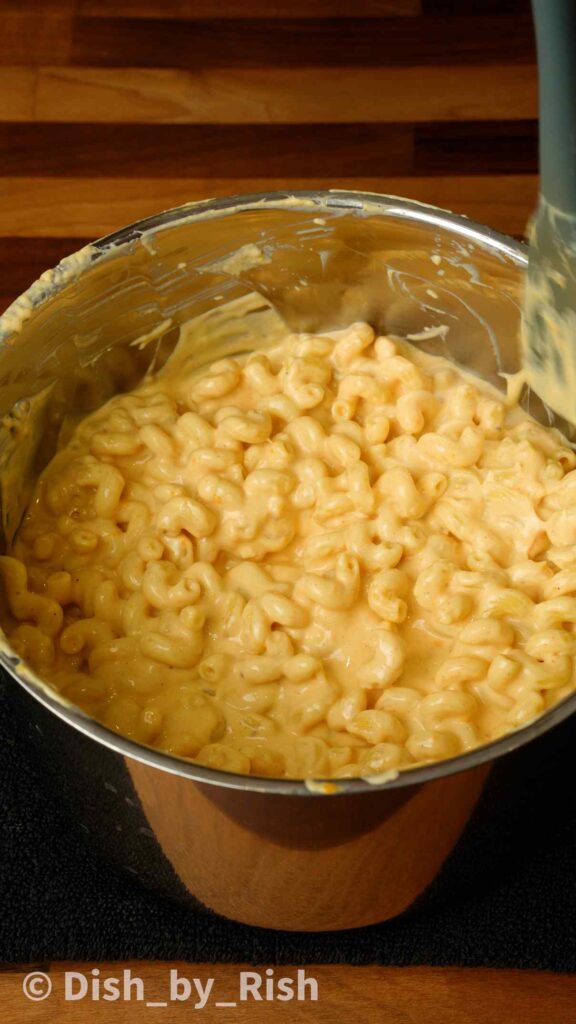
Remove the bay leaves and garlic from the cheese sauce and pour this all over the pasta. Mix well and have a quick check for seasoning
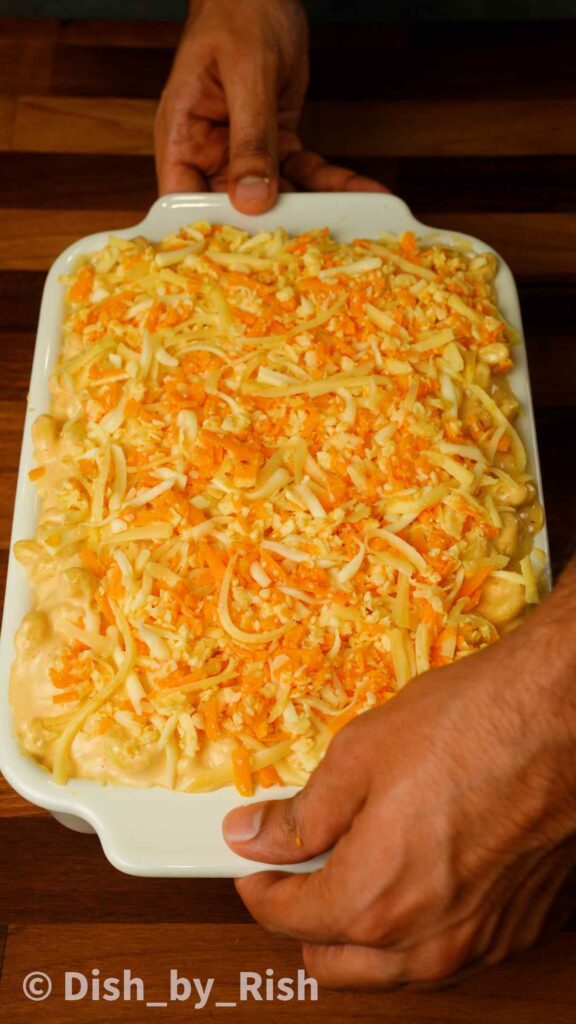
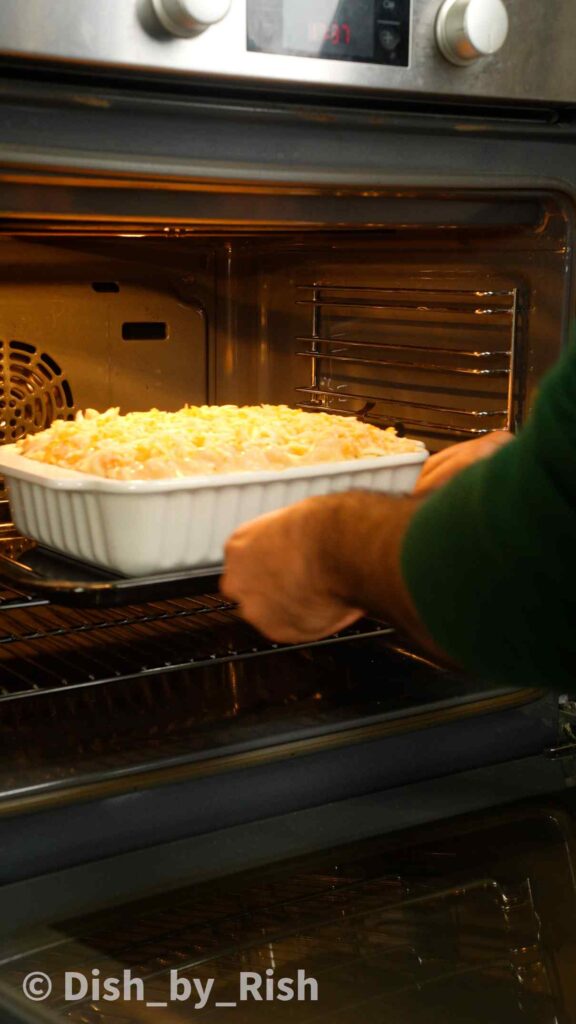
Pour the mac and cheese into a baking dish and top with the remaining cheeses. If it’s a bit full (like mine), I recommend placing it onto a tray before baking. This will make it easier to manoeuvre and catch any cheese drippings (I didn’t experience any!)
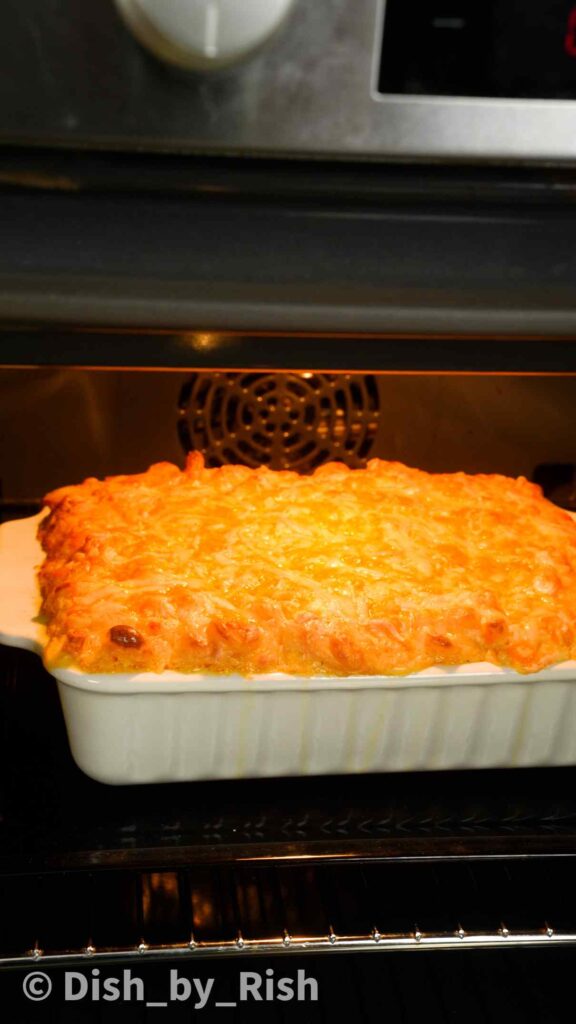
Bake until the cheese is melted and bubbly with a few crispy edges. Optionally, finish under the grill/broiler for extra crispiness if you prefer
Frequently Asked Questions
How long will this mac and cheese keep?
It will keep for 3-4 days refrigerated in an airtight container. Reheat with a splash of milk to bring back its creamy texture.
Can this mac and cheese be frozen?
Yes, you can freeze it before baking. Let it cool completely, portion if desired, cover tightly, and freeze for up to 2 months. Bake from frozen in a deep tray covered with foil until hot and bubbling.
Can I add extras? Or vegetables?
Absolutely! Some of my personal favourite extras are caramelised onions, finely chopped roasted broccoli, caramelised mushrooms, or even a little drizzle of truffle oil at the end.
If you enjoyed this recipe
Please do let me know! Leave a review and a rating below, I’d love to know how you got on.
You can also tag me on Instagram at @dish_by_rish. Or follow me on Facebook, Pinterest, Youtube, and TikTok to keep up with all my cooking and baking creations.
Until then, happy cooking!
Classic Mac and Cheese Recipe
Classic Mac and Cheese
This Classic Mac and Cheese uses cavatappi coated in a silky four-cheese sauce, made with sharp cheddar, red Leicester, Gouda, and mozzarella.
Ingredients
- 500g cavatappi pasta/macaroni/any pasta of choice
- 50g butter
- 40g plain flour/all purpose flour
- 1 clove of garlic
- 400ml evaporated milk
- 850-950ml whole milk
- 2 dried bay leaves
- 2 tsp garlic powder
- 2 tsp onion powder
- 1 tsp smoked paprika/cayenne
- 1 tbsp Dijon mustard
- 1 tsp black pepper
- 1/4 tsp grated nutmeg
- 150g extra mature cheddar/sharp cheddar
- 150g red Leicester
- 125g Gouda
- 125g mozzarella
Instructions
- For the cheeses, grate them using the large side of a box grater, and set aside
- For the cheese sauce, start by melting the butter in a pot over a medium low heat. Once melted, add in the flour and whisk till it forms a paste i.e. a roux. Add the clove of garlic (or two if you prefer a stronger flavour) and continue to whisk for around a minute in order to cook off the rawness of the flour
- Pour half of the the evaporated milk into the roux and whisk well until combined and starting to thicken - this will happen fairly quickly. Once thickened, add the second half of the evaporated milk and repeat
- Next, add in the bay leaves along with 850ml of whole milk in 2-3 increments (reserve the additional 100ml for later). Continue whisking well between each addition and give the base of the pot a frequent stir with a spatula to ensure nothing is sticking, especially around the corners
- Add in the garlic powder, onion powder, and smoked paprika. Cook for a further 5-6 minutes, stirring throughout. You should see it slightly thicken with a subtle glossy sheen
- Finish the béchamel sauce with Dijon mustard, black pepper, and grated nutmeg. Whisk until incorporated. I haven't added salt at this stage as the cheeses will be salty
- Take the sauce off the heat, and while still hot, add 2/3rds of the cheeses gradually - reserve 1/3rd for topping the mac and cheese. Whisk and stir between each addition to ensure the sauce says smooth and doesn't split. This is also a good time to start boiling the pasta, make sure to cook it for 2 minutes less than the packaging time as it will continue to cook in the oven
- Remove the bay leaves and garlic clove from the cheese sauce and pour this all over the pasta. Mix well and have a quick check for seasoning, adjust if required. The sauce should be fairly creamy at this stage, if it's looking on the drier/thicker side, I'd recommend adding in the remaining 100ml of milk now
- Pour the mac and cheese into a baking dish and top with the remaining cheeses. If it's a bit full (like mine), I recommend placing it onto a tray before baking. This will make it easier to manoeuvre and catch any cheese drippings (I didn't experience any!)
- Bake in a preheated oven at 160'C (fan)/180'C (conventional) - 320'F (fan)/355'F (conventional) for 15 minutes. I recommend finishing under the grill/broiler for a further 2-3 minutes or until the cheese has melted with a few crispy, browned edges
- Best served immediately
Notes
Frequently Asked Questions
How long will this mac and cheese keep?
- It will keep for 3-4 days refrigerated in an airtight container. Reheat with a splash of milk to bring back its creamy texture
Can this mac and cheese be frozen?
- Yes, you can freeze it before baking. Let it cool completely, portion if desired, cover tightly, and freeze for up to 2 months
- Bake from frozen in a deep tray covered with foil until hot and bubbling
Can I add extras? Or vegetables?
- Absolutely! Some of my personal favourite extras are caramelised onions, finely chopped roasted broccoli, caramelised mushrooms, or even a little drizzle of truffle oil at the end
Nutrition Information
Yield 8 Serving Size 1Amount Per Serving Calories 364Total Fat 21gSaturated Fat 12gUnsaturated Fat 9gCholesterol 64mgSodium 426mgCarbohydrates 28gFiber 2gSugar 1gProtein 17g
Note: This is an automated calculation and hence may not be entirely accurate.
